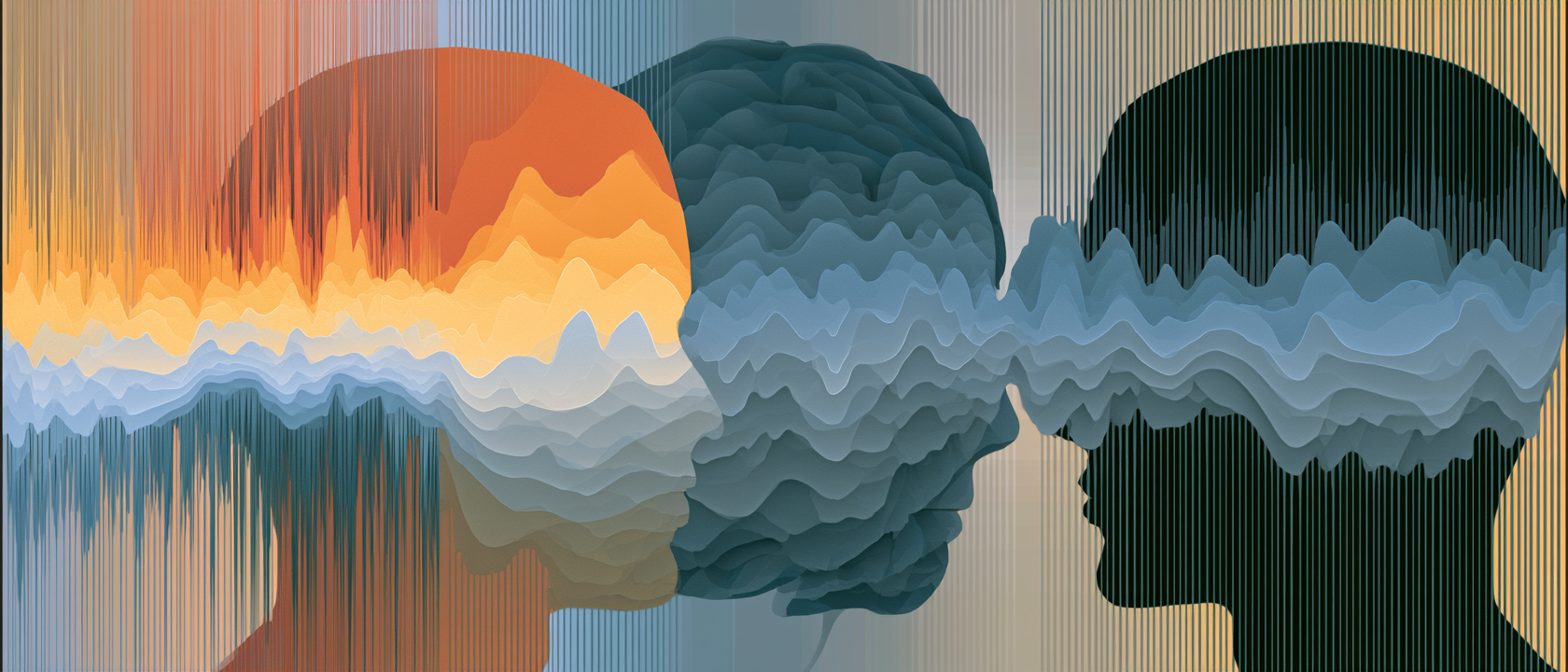
The Temporal Dynamics of Consciousness: Integrating Neuroscientific and Philosophical Perspectives
Consciousness remains one of the most perplexing phenomena at the intersection of neuroscience and philosophy. Despite advances across cognitive neuroscience, experimental psychology, and analytic philosophy, a comprehensive understanding of consciousness eludes definitive explanation. One promising avenue of inquiry concerns the temporal dimension of conscious experience: how subjective awareness unfolds through time and how the brain constructs temporal continuity from discrete neural events. This article argues that the temporal dynamics of consciousness constitute a fundamental but underappreciated aspect contributing to the ‘hard problem’ and that integrating insights from neuroscientific data and philosophical analysis can enhance explanatory frameworks. The investigation will focus on three core themes: the neural correlates of temporal integration in perception, the phenomenology of temporal experience, and implications for theories of consciousness.
Neural Correlates of Temporal Integration in Consciousness
Empirical research on the neural basis of temporal processing reveals that conscious awareness is not an instantaneous snapshot but a temporally extended construct synthesized by distributed networks. Electroencephalography (EEG), magnetoencephalography (MEG), and functional magnetic resonance imaging (fMRI) studies converge on the existence of temporal integration windows during which sensory inputs are accumulated and bound into a unified conscious percept. For instance, studies of the “temporal binding window”—generally estimated to span approximately 100-200 milliseconds—demonstrate how multisensory stimuli presented within this brief interval tend to be perceived as temporally and causally unified (Froehlich et al., 2021). This neural integration is thought to occur primarily within frontoparietal networks that mediate attentional selection and working memory maintenance.
Notably, research on the attentional blink paradigm illustrates how temporal constraints govern the availability of stimuli to conscious report. When two targets are presented within 200-500 ms of each other in a rapid serial visual presentation, the second target is often missed, indicating a temporal bottleneck in conscious processing (Martens & Wyble, 2010). Such findings highlight that consciousness is temporally gated, suggesting that discrete, transient “frames” or “moments” of awareness are strung together to create an apparently continuous experience. Recent electrophysiological models propose that these moments may be instantiated by burst-like oscillatory synchronizations, particularly in the gamma (30–80 Hz) and theta (4–8 Hz) frequency bands, enabling neurons distributed across cortical regions to transiently cohere their activity (VanRullen, 2016).
Phenomenology of Temporal Consciousness: Duration, Flow, and the Specious Present
While neuroscientific data elucidate mechanisms of temporal encoding, the subjective quality of temporal experience resists straightforward reduction. Phenomenologically, conscious experience exhibits a compelling sense of flow and duration that differs fundamentally from the discrete neural events that presumably underlie it. Philosophers such as William James introduced the concept of the “specious present,” defined as a short temporal interval perceived as a unified experience, reflecting the tension between the immediacy of consciousness and its own intrinsic temporality (James, 1890). This interval is neither a terse instant nor a static snapshot, but a lived moment that enfolds retention (recent past), immediate experience, and protention (anticipated near future).
Recent phenomenological and psychophysical research has refined this concept by showing how distortions in temporal perception affect conscious experience. For example, experimental manipulations of duration judgments reveal that subjective time can dilate or contract depending on emotional state, arousal, and attention (Tipples, 2011). Neurologically, patients with certain lesions—such as in the right parietal cortex—demonstrate impaired temporal sequencing and disrupted flow of experience, lending neuroanatomical credibility to phenomenological claims (Davis et al., 2008). The complementarity of neural disruptions and altered temporal phenomenology suggests that temporal consciousness has a tangible neurobiological substrate that is nevertheless not fully captured by mechanistic accounts.
Theoretical Implications: Temporal Binding and the Unity of Consciousness
The integration of temporal dynamics into theories of consciousness challenges static or purely spatial models of conscious unity. The well-known binding problem—the question of how dispersed neural activities combine into a coherent experience—requires an account of time as well as space. Temporal binding addresses how sensory inputs occurring at different moments are integrated into a seamless perceptual gestalt. Some theories propose that the brain constructs a temporal “window” of consciousness, often referred to as the “perceptual moment,” analogous to a frame in a movie reel but adaptable and dynamic (Eagleman, 2014).
The Global Workspace Theory (GWT), championed by Baars and operationalized in neuroscientific investigations by Dehaene et al., implicitly incorporates temporal dynamics by emphasizing how information must persist long enough to be globally broadcast to multiple cognitive subsystems (Dehaene & Changeux, 2011). In this view, temporal integration ensures that fleeting neural representations achieve the coherence required for conscious report and flexible action. Meanwhile, Integrated Information Theory (IIT) approaches temporal integration from an informational perspective, stipulating that the integrated causal power within neural networks over a temporal window constitutes the substrate of consciousness (Tononi et al., 2016). The temporal grain of integration thus becomes a parameter influencing the “amount” and “quality” of conscious experience in IIT’s mathematical formalism.
Nonetheless, these approaches face ongoing challenges. Defining the optimal temporal scale of integration—whether it ranges from tens to hundreds of milliseconds or extends to seconds—and reconciling discrete neural events with continuous phenomenal flow remain contested. The granularity of temporal binding may vary across sensory modalities and cognitive states, adding complexity to any universal account. Notably, the differences between temporal integration involved in moment-to-moment perception and the extended temporal horizons underpinning selfhood and autobiographical continuity remain inadequately described.
Extensions: Temporal Consciousness in Pathology and Altered States
Exploring variations in temporal consciousness across pathological and altered states sharpens understanding of its centrality to conscious experience. For example, schizophrenia is often characterized by disruptions in temporal processing, including altered duration perception and impaired temporal integration, which correlate with dissociative symptoms and fragmented sense of self (Stephane et al., 2010). Such findings suggest that early neural dysfunction in timing mechanisms may undermine the continuity of consciousness and coherent self-experience.
Similarly, psychedelic states induced by substances such as psilocybin or LSD profoundly modify temporal awareness—subjects report warped or even abolished time perception, including feelings of timelessness or eternity (Carhart-Harris et al., 2016). Neuroimaging studies reveal altered oscillatory dynamics and disrupted functional connectivity within and between temporal processing networks during these states. These observations intimate that temporal processing is not only necessary for ordinary consciousness but is also a malleable dimension capable of deeper modulation, with consequences for phenomenological experience.
Conclusion: Toward a Multiscale Model of Temporal Consciousness
The temporal structure of consciousness emerges as a multilayered and dynamic phenomenon, bridging fast neural integration windows and slower, extended subjective experiences of duration and continuity. Although disciplines differ in methods and emphasis, convergent evidence highlights that conscious awareness arises not from static snapshots but from continuous temporal synthesis that engages distributed cortical circuits and oscillatory mechanisms. Despite promising models like GWT and IIT, significant gaps remain in fully explicating how temporal binding correlates with both the unity and the flow of consciousness.
Progress requires refining neurophysiological measurements to capture fine-grained temporal dynamics alongside sophisticated phenomenological descriptions, integrating insights across sensory systems, cognitive states, and pathological conditions. Furthermore, nuance in understanding the temporal grain and hierarchical temporal structures—from millisecond binding moments to autobiographical narrative time—may provide a more comprehensive account of consciousness. Hence, the study of temporal dynamics offers not only a promising explanatory route but also a framing challenge: explicating how time itself is a constitutive element of conscious experience, rather than a mere container in which consciousness occurs.
References
- Davis, K. D., Mikulis, D. J., & Lozano, A. M. (2008). Parietal lesions and temporal processing deficits. Brain, 131(11), 2879-2891. https://doi.org/10.1093/brain/awn210
- Dehaene, S., & Changeux, J.-P. (2011). Experimental and theoretical approaches to conscious processing. Neuron, 70(2), 200-227. https://doi.org/10.1016/j.neuron.2011.03.018
- Eagleman, D. M. (2014). Human time perception and its illusions. Current Opinion in Neurobiology, 18(2), 131-136. https://doi.org/10.1016/j.conb.2008.06.002
- Froehlich, J., Cecere, R., & Romei, V. (2021). Neural and behavioral correlates of temporal binding in multisensory perception. NeuroImage, 232, 117898. https://doi.org/10.1016/j.neuroimage.2021.117898
- James, W. (1890). The Principles of Psychology. New York: Henry Holt and Company. (See chapter on “The Specious Present”) https://psychclassics.yorku.ca/James/Principles/
- Martens, S., & Wyble, B. (2010). The attentional blink: Past, present, and future of a blind spot in perceptual awareness. Neuroscience & Biobehavioral Reviews, 34(6), 947-957. https://doi.org/10.1016/j.neubiorev.2009.12.005
- Stephane, M., Biley, C., Martinez, A., Lanoire, Y., & McNally, R. J. (2010). Neural timing in schizophrenia: A dysfunctional theory of temporal integration. Schizophrenia Research, 121(1-3), 96-105. https://doi.org/10.1016/j.schres.2010.03.029
- Tipples, J. (2011). Fear and time: Evidence from temporal order judgments. Emotion, 11(3), 445-449. https://doi.org/10.1037/a0022750
- Tononi, G., Boly, M., Massimini, M., & Koch, C. (2016). Integrated information theory: From consciousness to its physical substrate. Nature Reviews Neuroscience, 17(7), 450-461. https://doi.org/10.1038/nrn.2016.44
- VanRullen, R. (2016). Perceptual cycles. Trends in Cognitive Sciences, 20(10), 723-735. https://doi.org/10.1016/j.tics.2016.07.006