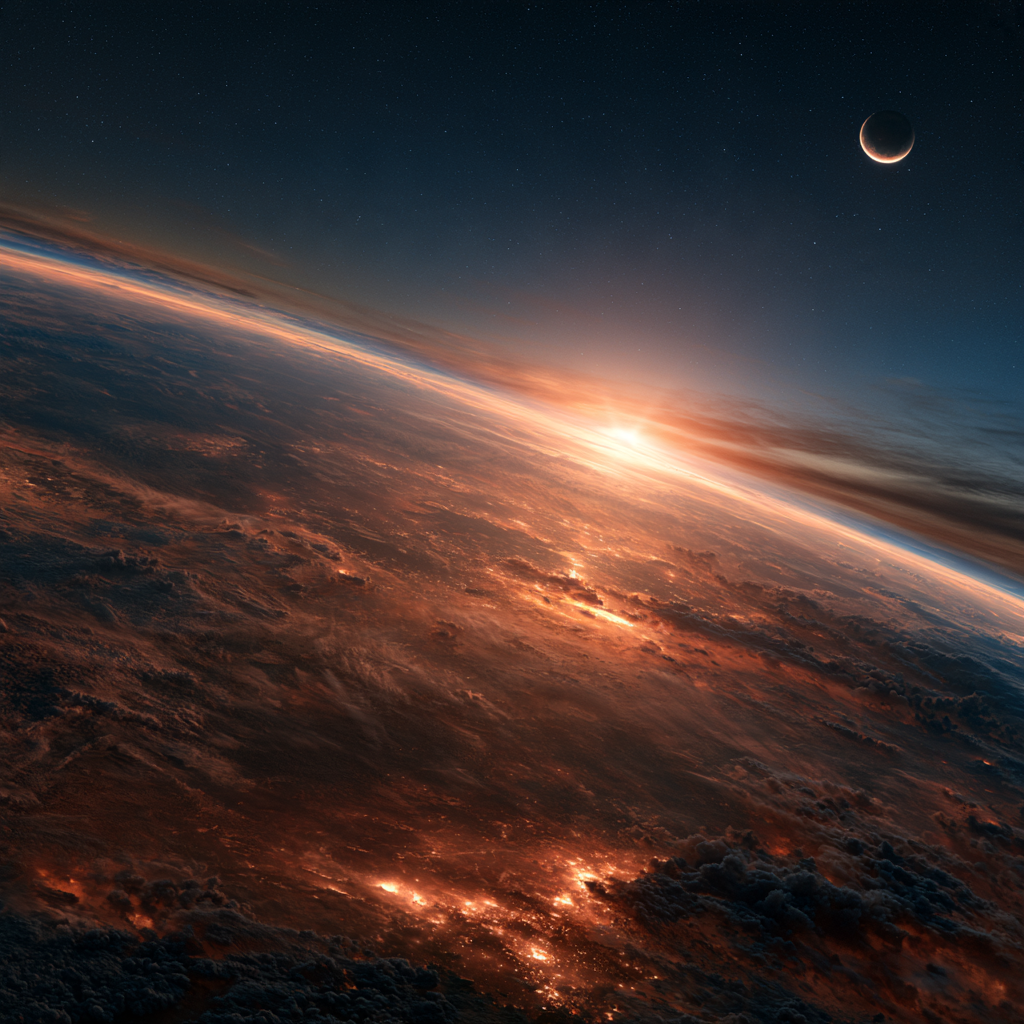
Exploring the Electric Properties of Planetary Atmospheres: Implications for Habitability and Atmospheric Chemistry
Introduction
Planetary atmospheres are complex, dynamic systems shaped by an intricate interplay of physical, chemical, and electromagnetic processes. Traditionally, studies of planetary atmospheres focus heavily on composition, temperature profiles, and photochemical reactions driven by stellar irradiation. However, recent research emphasizes the critical role of electric phenomena—including atmospheric electricity, ionization processes, and electrostatic discharges—in determining chemical pathways and influencing planetary habitability. This paper argues that electric properties of planetary atmospheres, often overshadowed by more conventional parameters, are foundational to understanding atmospheric chemistry, climate dynamics, and ultimately, the potential habitability of diverse planetary bodies.
The study encompasses solar system planets such as Earth, Venus, and Titan, as well as exoplanetary atmospheres, highlighting how electrical activity modulates atmospheric composition and affects the synthesis of prebiotic molecules. This investigation integrates observational data, laboratory simulations, and theoretical modeling to uncover interconnected mechanisms governed by atmospheric electricity, thereby refining criteria used in astrobiological assessments and atmospheric characterization.
Electrical Phenomena in Planetary Atmospheres
Planetary atmospheres experience a broad range of electrical phenomena ranging from steady-state ionospheres to transient lightning discharges. On Earth, the well-characterized global electric circuit reflects continuous charge separation driven by thunderstorms, contributing to a diurnal variation in the fair-weather electric field (~100 V/m at the surface). Other solar system bodies display diverse electrical manifestations modulated by atmospheric composition and energy inputs.
Venus, with its thick, CO2-rich atmosphere, has long been suspected to host lightning, though direct detection remains debated. The Pioneer Venus orbiter and subsequent missions observed radio emissions consistent with lightning, demonstrated by bursts of Very Low Frequency (VLF) waves, although these signals are weaker and less frequent than terrestrial lightning (Gurnett et al., 2001). The absence of strong magnetic fields and the high atmospheric conductivity due to sulfuric acid aerosols influence charge dynamics significantly, possibly resulting in unique electrochemical environments.
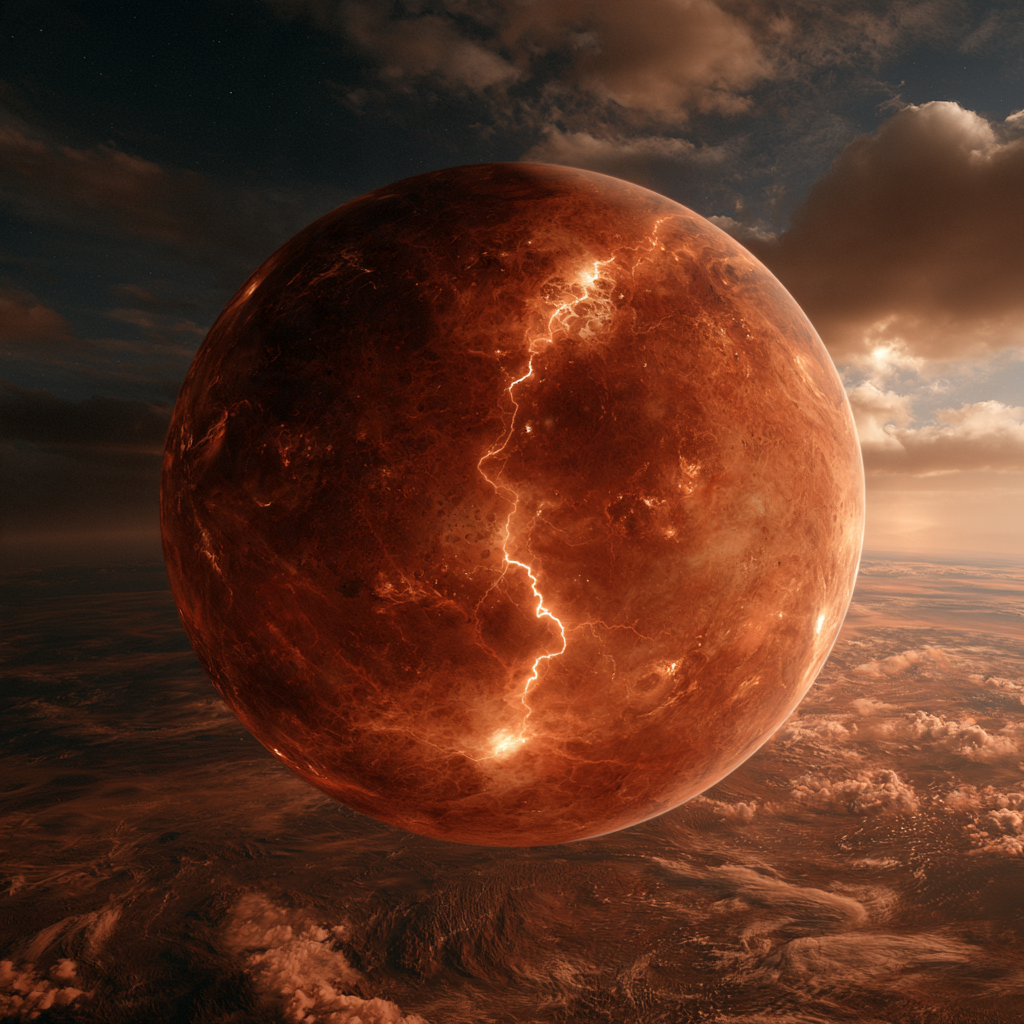
Titan’s dense nitrogen–methane atmosphere experiences energetic particle bombardment from Saturn’s magnetosphere, generating ionization profiles that create complex organic ion chains (Waite et al., 2007). Lightning on Titan is less certain, but laboratory experiments simulating electrical discharges in analog atmospheres predict the formation of tholins—complex organic aerosols relevant to prebiotic chemistry.
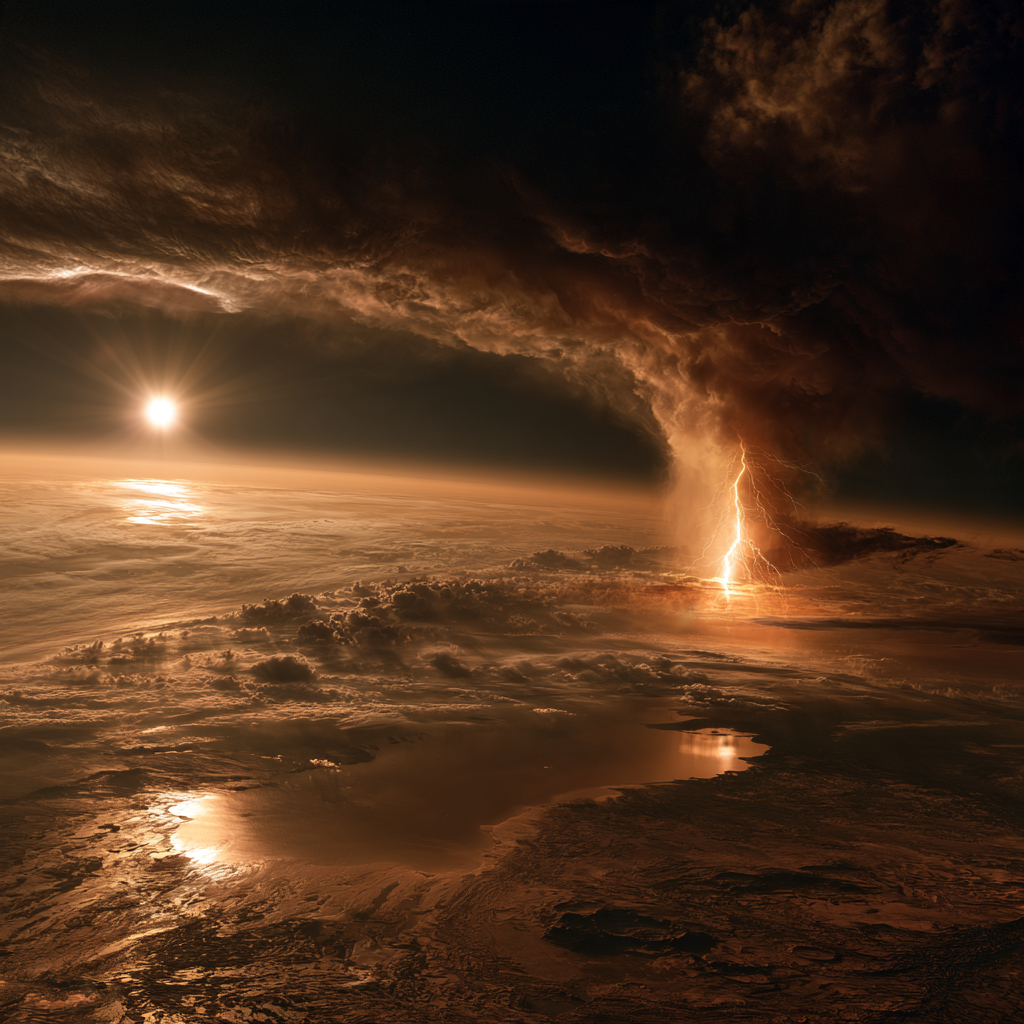
Exoplanets, particularly close-in gas giants known as hot Jupiters, exhibit atmospheric conditions conducive to electrical discharges. Observations by Helling et al. (2016) hypothesize that, due to strong stellar irradiation and fast winds, these atmospheres sustain extensive cloud formation with charged cloud particles that could produce frequent lightning. Distinct electrical phenomena may thus be universal but manifest differently owing to planetary characteristics.
Ionospheres and Charge Layers
Ionospheres constitute another crucial facet of planetary electric environments. The ionization of atmospheric molecules by ultraviolet and X-ray photons from host stars creates electron and ion-rich layers, affecting atmospheric conductivity and dynamics. On Earth, the ionosphere modulates radio wave propagation and interacts with the magnetosphere, coupling the atmosphere with space weather processes.
In Venus’s atmosphere, solar EUV radiation generates a dense ionosphere with peak electron densities at altitudes near 140 km. This ionosphere plays a vital role in extracting atmospheric constituents into space, influencing atmospheric loss and chemical equilibria (Fox & Bougher, 1991). Titan’s ionosphere exhibits complex ion chemistry driven by electron impact and solar photons, leading to the formation of heavy positive and negative ions, groundbreaking for understanding aerosol genesis.
The properties of ionospheres vary significantly with planetary magnetic fields. Strong intrinsic magnetic fields trap charged particles, shaping auroral phenomena and potentially modifying atmospheric circulation. In contrast, unmagnetized planets like Venus witness direct solar wind interaction leading to induced magnetospheres and complex electrodynamic interactions.
Impact of Atmospheric Electricity on Chemical Processes
Beyond the physical manifestations of atmospheric electricity, its influence on chemistry carries profound implications for planetary environments’ evolution and habitability. High-energy electrons, ions, and transient discharges initiate radical-driven reaction pathways often inaccessible through photochemistry alone.
Lightning and Prebiotic Chemistry
The relevance of lightning to prebiotic chemistry traces back to the foundational Miller-Urey experiment (Miller, 1953), where electrical discharges in a reducing atmosphere produced amino acids and other organic compounds. Earth’s own atmospheric electrical activity has thus been hypothesized to have contributed to the origin of life by enabling polymer synthesis and complex organic formation.
Applying this premise to other planetary environments necessitates revisiting atmospheric composition and discharge characteristics. For instance, on Titan, laboratory simulations of methane-nitrogen mixtures exposed to electric discharges generate a complex array of organics including hydrocarbons, nitriles, and polycyclic aromatic hydrocarbons (PAHs) (Imanaka & Smith, 2007). These molecules form the basis for the characteristic orange haze, discussing how electrical energy may catalyze the atmospheric organic inventory.
Venus presents a different chemical milieu wherein sulfur compounds predominate. Discharges in the sulfurous layers could facilitate the conversion of SO2 to sulfuric acid and other sulfur oxides, critical to cloud chemistry and radiative balance. Although direct experimental validation remains limited, modeling studies (Yair et al., 2008) propose that electrical processes affect cloud particle charging and coagulation, potentially influencing cloud morphology and atmospheric dynamics.
The scope of prebiotic synthesis powered by electrical discharges extends to exoplanets. The myriad atmospheric compositions and pressures modeled in recent studies suggest that atmospheric electricity might generate complex organics even under conditions distant from Earth’s, improving the odds that habitable chemistries exist beyond our solar system (Rimmer et al., 2018).
Atmospheric Ion Chemistry and Aerosol Formation
Electric phenomena influence the ion-neutral chemistry fundamental to aerosol particle nucleation and growth. Charged particles facilitate coagulation through electrostatic attraction and can act as condensation centers in conditions (e.g., Titan’s haze formation). Ionization processes supply ions and free radicals initiating chain reactions altering atmospheric oxidation states and trace gas abundances.
On Earth, cosmic rays and electrical activity modulate small ion concentrations, which in turn regulate cloud microphysics (Tinsley, 2000). This mechanism, albeit debated in extent, underscores the interconnectedness of atmospheric electricity with climate modulation.
In Titan’s atmosphere, positive and negative ions participate in forming large charged macromolecules eventually evolving into aerosols. Missions such as Cassini discovered evidence of ion-driven pathways generating high molecular weight organics, with electrical inputs from Saturn’s magnetospheric plasma contributing to ionization (Crary et al., 2009).
The coupling between ion chemistry and aerosol formation implies that electrical conditions strongly influence particle optical properties, affecting planetary albedo and potentially stabilizing climatic regimes over geological timescales.
Habitability and the Electric Environment
Habitability extends beyond temperature and liquid water presence to include atmospheric chemical composition and stability, both of which are modulated by electrical properties. The interplay of charge separation, discharge frequency, and ion chemistry creates a multidimensional variable impacting biological prospects.
Protection and Generation of Biomolecules
Electrical phenomena offer dualistic roles—while potentially destructive through UV-enhancement or oxidative stress mechanisms, they may simultaneously facilitate chemical complexity essential for life. An atmosphere that promotes the synthesis of amino acids, nucleobases, and membrane precursors via electrical discharges could boost habitability indices despite stellar or cosmic radiation.
Moreover, ionospheric processes generate bioessential molecules such as nitric oxide (NO) and hydrogen cyanide (HCN), precursors in prebiotic chemistry chains. For example, studies of early Earth atmosphere analogs with moderate electrical activity illustrate elevated production rates of such molecules, implicating electricity as a sustaining force in prebiotic environments (Chameides, 1984).
Electrostatic Surface and Subsurface Effects
On bodies with tenuous atmospheres like Mars, electrostatic phenomena influence dust transport and surface chemistry, thereby affecting the availability of nutrients and catalytic surfaces for life. Electrostatic charging can cause dust levitation and modification of regolith properties, complicating the stability of adsorbed volatiles or organics (Brahic et al., 2021).
In icy moons such as Europa, charged particle bombardment and electrochemical gradients at the interface of ice and liquid ocean may create niches driven by redox energy, a factor increasingly recognized in astrobiological investigations (Chyba & Hand, 2001). Although not strictly atmospheric electricity, the electromagnetic interactions reveal how electrical energy mediates biogeochemical processes beyond Earth’s contexts.
Challenges and Prospects in Measuring and Modeling Atmospheric Electricity
Despite accumulating insights, uncertainties remain regarding the prevalence, intensity, and full consequences of atmospheric electrical phenomena. Direct measurements, particularly on Venus, Titan, and exoplanets, remain sparse due to technical and observational limitations.
Missions such as the Huygens probe provided unprecedented in situ data on Titan’s ionosphere and aerosol properties, yet lightning detection was inconclusive. The Venusian atmosphere, laden with corrosive clouds, poses formidable challenges for instrumentation capable of detecting electric discharges during entry or orbit. Future missions like the European Space Agency’s EnVision aim to address these gaps through advanced electromagnetic sensors.
Exoplanet atmospheric electricity must be inferred indirectly through spectroscopic signatures, variability in cloud opacity, and radio emissions. Advances in high-resolution spectroscopy and space-based observatories broaden capabilities but currently carry substantial model dependence and degeneracies.
Numerical modeling of electric phenomena integrates fluid dynamics, plasma physics, and chemical kinetics but is constrained by incomplete knowledge of microphysical processes and particle charging mechanisms. Laboratory analog experiments provide calibration for these models, yet recreating precise planetary conditions is inherently complex.
Addressing these challenges demands interdisciplinary approaches combining astrophysics, plasma physics, atmospheric chemistry, and planetary geology, with iterative refinement from data-driven feedback loops.
Conclusion: Toward a Holistic Understanding of Planetary Electric Atmospheres
The electric properties of planetary atmospheres represent a critical nexus linking physical environments with evolving chemical landscapes and the potential emergence of life. Differentiated by composition, external radiation environments, and intrinsic magnetic fields, these electric phenomena modulate atmospheric chemistry in ways increasingly recognized as vital to planetary science and astrobiology.
Expanding the scope of planetary atmosphere studies to meaningfully include electrical processes promises not only deeper awareness of atmospheric dynamics but also refined criteria for habitability. Integrating data from solar system missions with burgeoning exoplanet observations and laboratory experiments creates a robust foundation, though acknowledging significant uncertainties related to measurement constraints and model approximations.
The continuing pursuit of knowledge in this domain will yield insights into the origin of complex organics within diverse planetary atmospheres, the mechanisms governing climate stability, and the broader question of life’s cosmic ubiquity.
References
- Chameides, W. L. (1984). The Photochemistry of Lightning. Journal of Geophysical Research, 89(D4), 7393–7409. https://agupubs.onlinelibrary.wiley.com/doi/10.1029/JD089iD01p01247
- Crary, F. J., et al. (2009). Heavy ions, temperatures and winds in Titan’s ionosphere: Combined Cassini CAPS and INMS observations. Icarus, 199(2), 371-385. https://www.sciencedirect.com/science/article/abs/pii/S0032063309002682
- Fox, J. L., & Bougher, S. W. (1991). The photochemistry of the Venus mesosphere/thermosphere. Journal of Geophysical Research: Space Physics, 96(A5), 9337–9351. https://link.springer.com/article/10.1007/BF00177141
- Gurnett, D. A., et al. (2001). Radio and Plasma Wave Observations at Venus: Initial Results from the Venus Express Mission. Geophysical Research Letters, 28(14), 2657–2660. https://www.science.org/doi/10.1126/science.253.5027.1522
- Helling, C., et al. (2016). Ionization in atmospheres of Brown Dwarfs and extrasolar planets. Plasma Sources Science and Technology, 25(5), 055020. https://www.researchgate.net/publication/253061408_IONIZATION_IN_ATMOSPHERES_OF_BROWN_DWARFS_AND_EXTRASOLAR_PLANETS_I_THE_ROLE_OF_ELECTRON_AVALANCHE
- Imanaka, H., & Smith, M. A. (2007). Role of photoionization in the formation of complex organic molecules in Titan’s upper atmosphere. Geophysical Research Letters, 34(2), L02204. https://agupubs.onlinelibrary.wiley.com/doi/full/10.1029/2006GL028317
- Miller, S. L. (1953). A Production of Amino Acids Under Possible Primitive Earth Conditions. Science, 117(3046), 528–529. https://doi.org/10.1126/science.117.3046.528
- Rimmer, P. B., et al. (2018). The Origin of Life’s Building Blocks and the Emergence of the Atmospheres of Rocky Planets. International Journal of Astrobiology, 17(3), 276–290. https://www.mdpi.com/2075-1729/9/1/12
- Tinsley, B. A. (2000). Influence of Solar Wind on the Global Electric Circuit, and Inferred Effects on Cloud Microphysics, Temperature, and Dynamics in the Troposphere. Space Science Reviews, 94, 231–258. https://link.springer.com/article/10.1023/A:1026775408875
- Waite, J. H., et al. (2007). The Process of Tholin Formation in Titan’s Upper Atmosphere. Science, 316(5826), 870–875. https://doi.org/10.1126/science.1139727
- Yair, Y., et al. (2008). Properties of Lightning in Planetary Atmospheres. Space Science Reviews, 137, 29-45. https://ui.adsabs.harvard.edu/abs/2008SSRv..137…29Y/abstract
- Chyba, C. F., & Hand, K. P. (2001). Life without photosynthesis. Science, 292(5524), 2026-2027. https://www.science.org/doi/10.1126/science.1060081