Catalogue of Known Alien Races in Andromeda (~22,500 A.A.)
A. Major Civilizational Powers
1. Auric Ascendancy (Humans)
They’ll sell you the gravity under your boots and charge you for the meter. The Auric Ascendancy is what happens when a species decides survival is a bookkeeping problem — merchant-kings who rule from gilded thrones bolted to credit ledgers, trading fleets that outgun most navies, and a talent for hybridization that has scattered their genes through half the galaxy’s veins. They fight wars the way other people balance accounts: meticulously, and always at a profit. The galaxy resents them. The galaxy keeps buying.

2. Daimons
They are what humans would be if death were an oversight. Immortal, sterile, built at the absolute peak of what gene-engineering could sculpt before the knowledge was lost — and there are fewer than a hundred left, walking ruins of a species that once called itself gods. One Daimon has held a boarding corridor against a hive-ship’s worth of drones and walked out without a scratch. They are worshiped, hunted, harvested for their marrow, and mythologized into something that was never quite people. Ask one. They’ll tell you they remember when they were.
3. Zhoryn Collectives
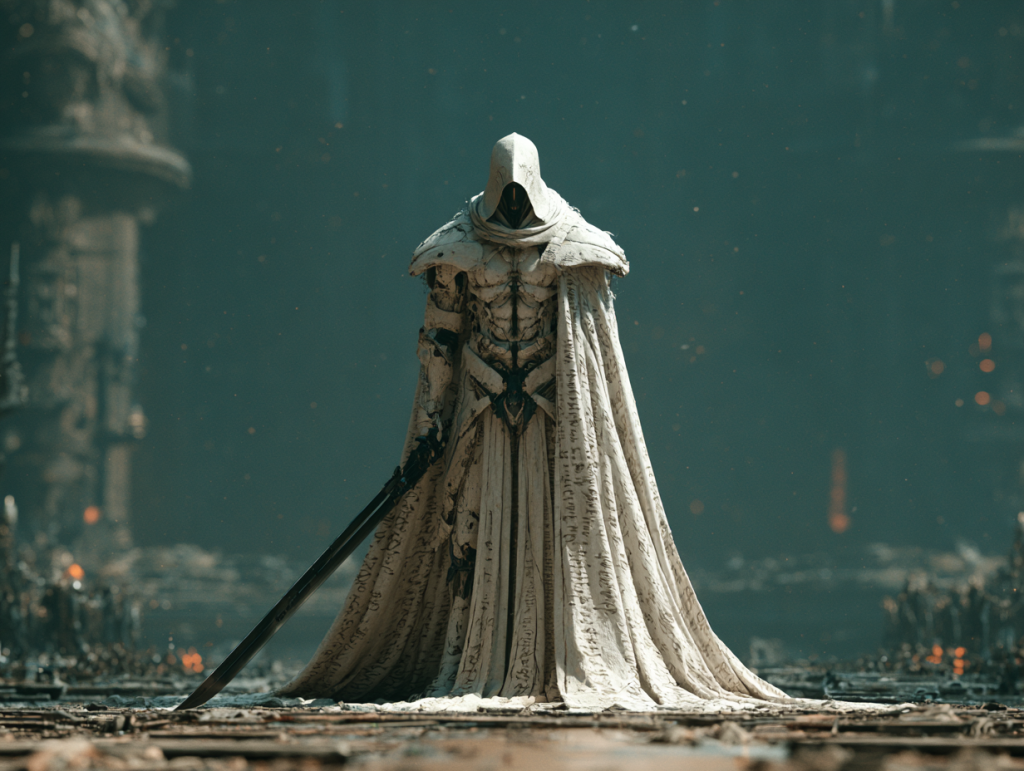
A hive that learned to wear other species like clothes. The Zhoryn don’t conquer so much as absorb — their modular exosuits grow around them, their hive-minds stretch across worlds, and the species they integrate wake up with food, order, and safety, and slowly realize they no longer remember which thoughts were theirs. They’re the fastest-growing empire in the galaxy, and the friendliest thing you’ll ever meet that plans to eat your culture’s personality for lunch. Some call them benevolent. The ones who escaped call them something else.

4a. Kethari
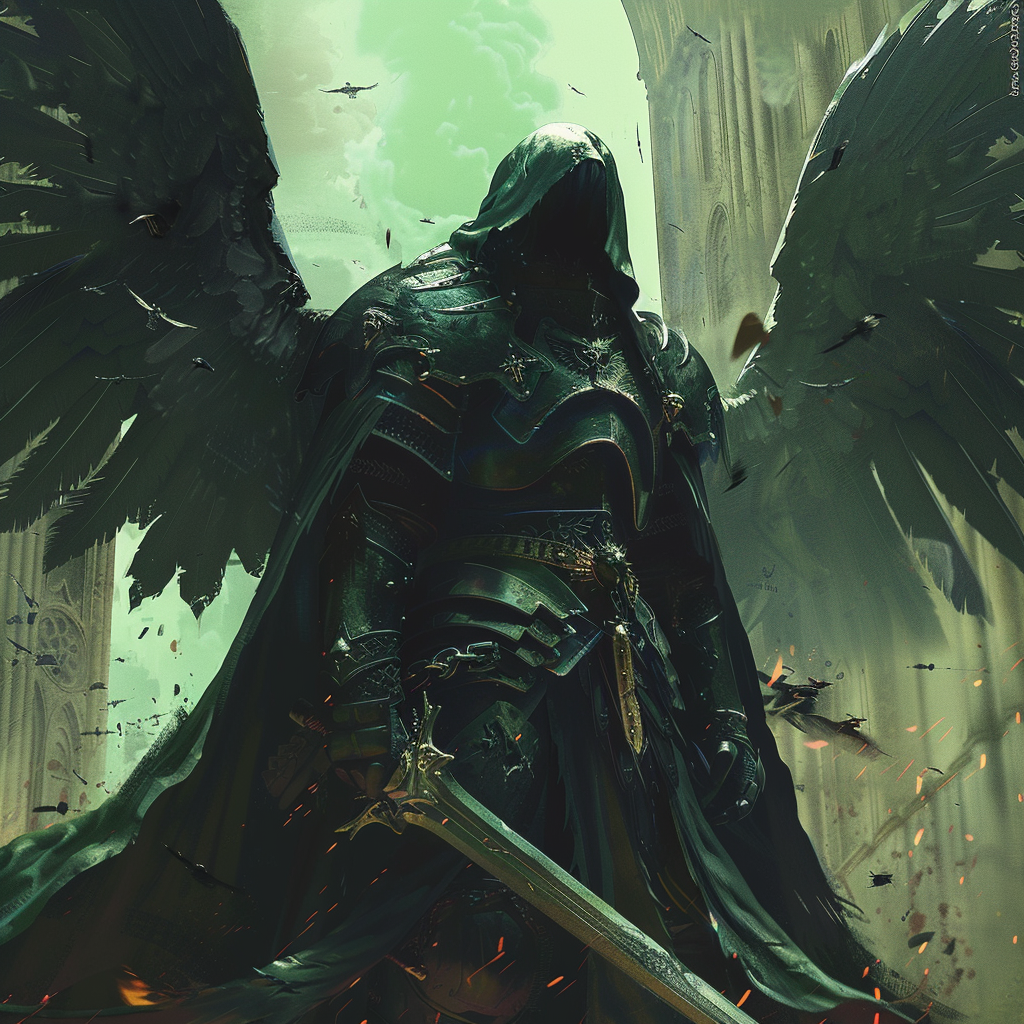
Birds who photosynthesize starlight and sculpt plasma like clay. Their fractal wings catch the solar wind and sing in frequencies that stabilize wormholes and raze fleets — the same choir, the same breath. They’re artists who make war like a symphony, and their culture has outlived three human empires by refusing to rush anything. If you see their wings blackened with radiation scars, you’re looking at a veteran who has been fighting far longer than your grandparents were alive.

4b. Sarynth
You cannot shake hands with a Sarynth. They are magnetic-field intelligences, aurora-bodies that live inside the dance of stellar plasma, and they think in pulses a mortal brain can only feel as weather. When they speak, ships’ instruments shiver. When they ally with you, entire systems become sanctuaries where entropy doesn’t dare bite. They are the reason the Choral Empyrean is the most admired bloc in the galaxy — and the most incomprehensible. Their kindness is real. It’s just measured in centuries and atmospheres.

5. Carthish Dominion
Silicon and patience and something that used to be people. The Carthish are crystalline entities who think in geologic time and fight like avalanches — slow, unstoppable, and utterly indifferent to what they crush. Their chorus-ships are the horror story every spacer tells at the bottom of a bottle: hulls fused with the living, screaming forever as living circuitry inside crystal lattices. They’re declining now, fractured by mirror-wars, but one Carthish dreadnought can still level a colony. You don’t fight them. You run, and you hope they were too slow to notice you.

6. Turcus Slaver-Kingdoms
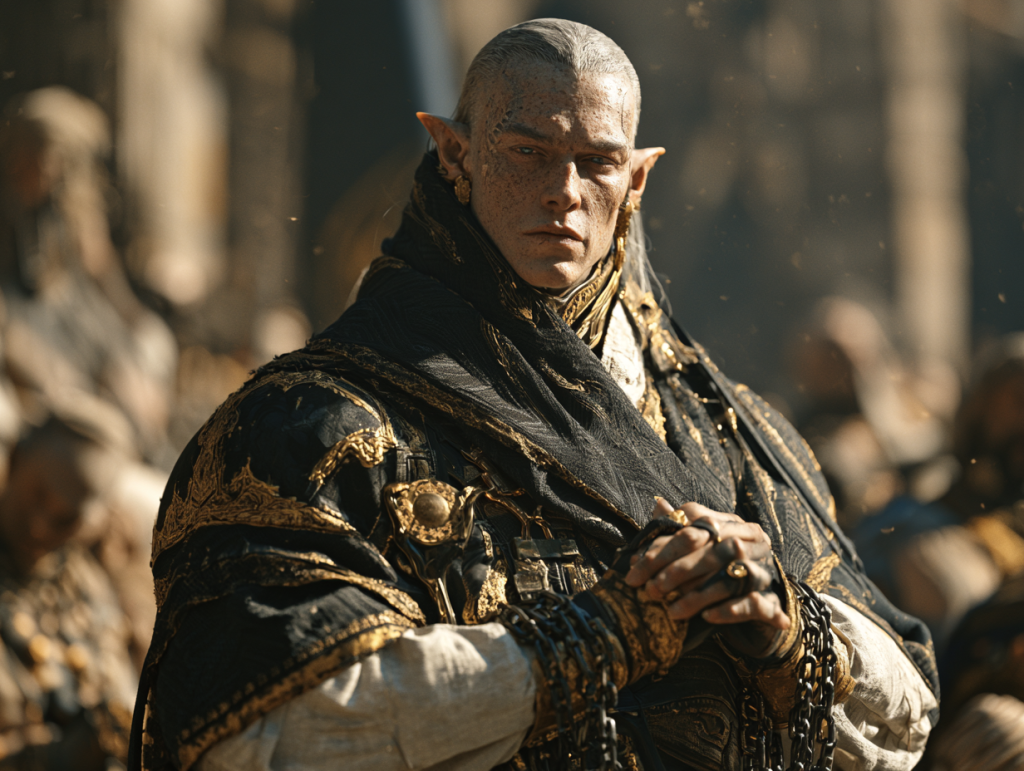
Tall, graceful, beautiful, and the reason half the galaxy sleeps armed. The Turcus rose from nothing in five hundred years and built an empire on the only product that never stops being in demand: people. Their Flesh Markets sell soldiers, concubines, and hybrids with a merchant’s smile and a torturer’s patience, and because they’re genetically compatible with humans, they can breed your grandchildren into their inventory. They are the dark mirror of every human empire that ever claimed to be civilizing something. Humanity’s main enemy isn’t a monster. It’s a face in the mirror that’s just a little too perfect.
7. Myrrax Remnants
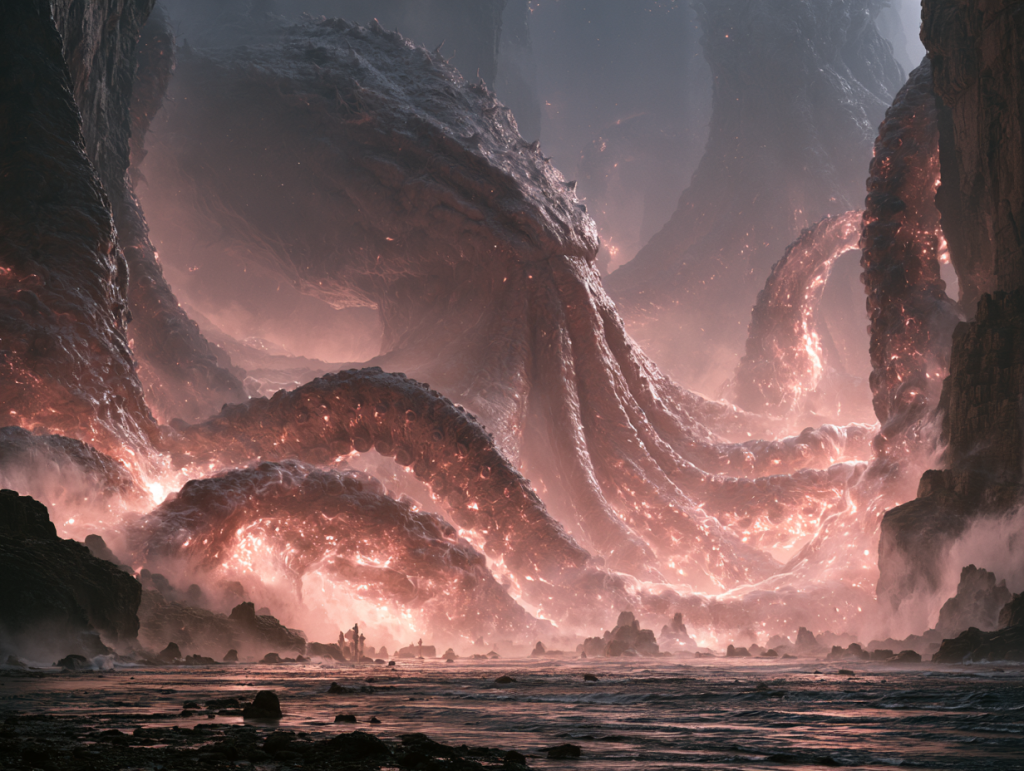
The deep ocean learned to hunt. The Myrrax were a thalassocracy that nearly drowned the galaxy, reduced now to pirate kingdoms in rain-slick black ships that come up from the abyss without a sound. They raid coast-worlds, drag habitats down into crushing darkness, and vanish before the alarms finish ringing. Their culture was always a religious crusade — they genuinely believe drybreathers defile the true abyss. They’re broken, scattered, and still the most terrifying thing you’ll ever see surface from a moon’s shadowed sea.

8. Qeythari Swarms
Aliens even to aliens. The Qeythari are energy-bodied cephalopods from deep-core worlds where gravity crushes steel and light is violet and violent, and they think in swarms the way you think in heartbeats. They manipulate gravity like breathing, and their motives are so far outside mortal diplomacy that the Sarynth — themselves incomprehensible — are the only ones who claim to understand them. They’re rising fast, allied with the Empyrean, and expanding into territory everyone else was too slow to claim. Nobody knows what they want. That’s the part that keeps people awake.
9. Ysrathi Jade Clans
The universe’s most expensive and most feared swords-for-hire. Descendants of marrow-cults who consumed their enemies to absorb their strength, the Jade Clans refined the old cannibal faith into a warrior discipline so pure it’s practically a religion of payroll. They’re exoskeletal arthropods from high-gravity worlds, built dense and deliberate, and they fight with a cold competence that makes other mercenaries look like amateurs swinging sticks. They’re loyal — to the contract, not the cause. If you can afford them, you can afford to win. If you can’t, you hope nobody else can either.

B. Secondary Alien Peoples
10. Seykar Ghost-Hives
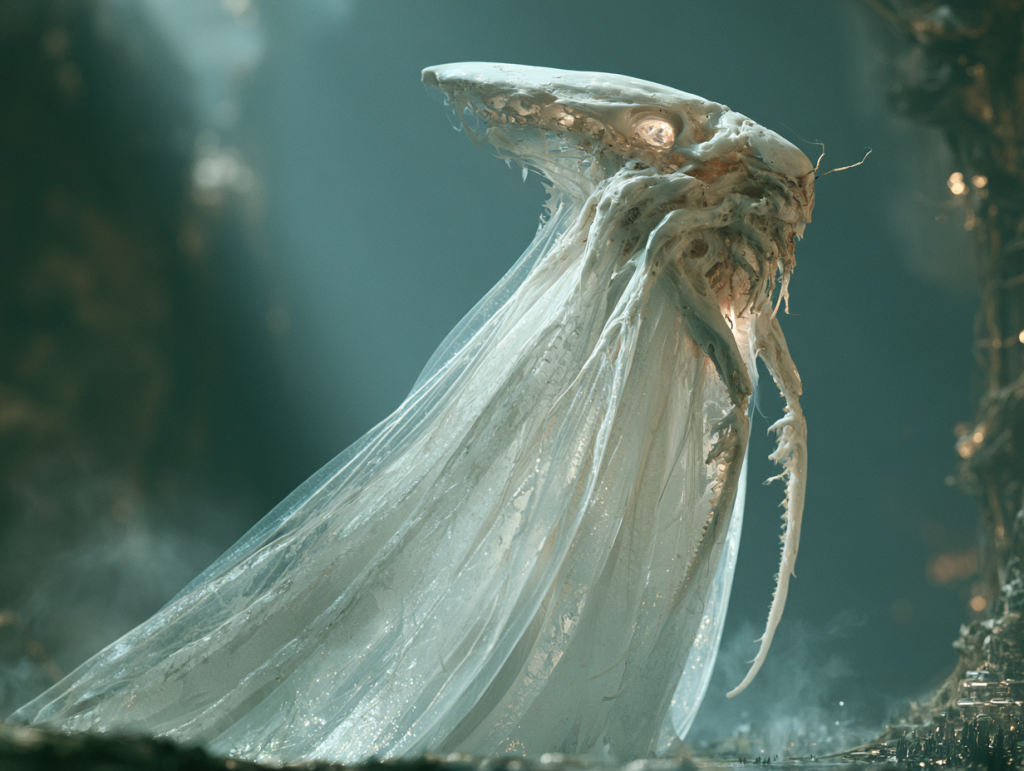
They should be extinct. They’ve been “exterminated” four times, and every time a few got away — into the ruins, the derelict fleets, the habitats nobody patrols anymore. The Seykar are pale insectoid hive-drones that can slip into a human nervous system and ride it like a borrowed coat, and half the colonies in the galaxy still swear they’re a myth. That’s the point. A bogeyman doesn’t need a fleet. It just needs you to be alone in the dark, and slightly unsure.
11. Veythran Guild of Echoes
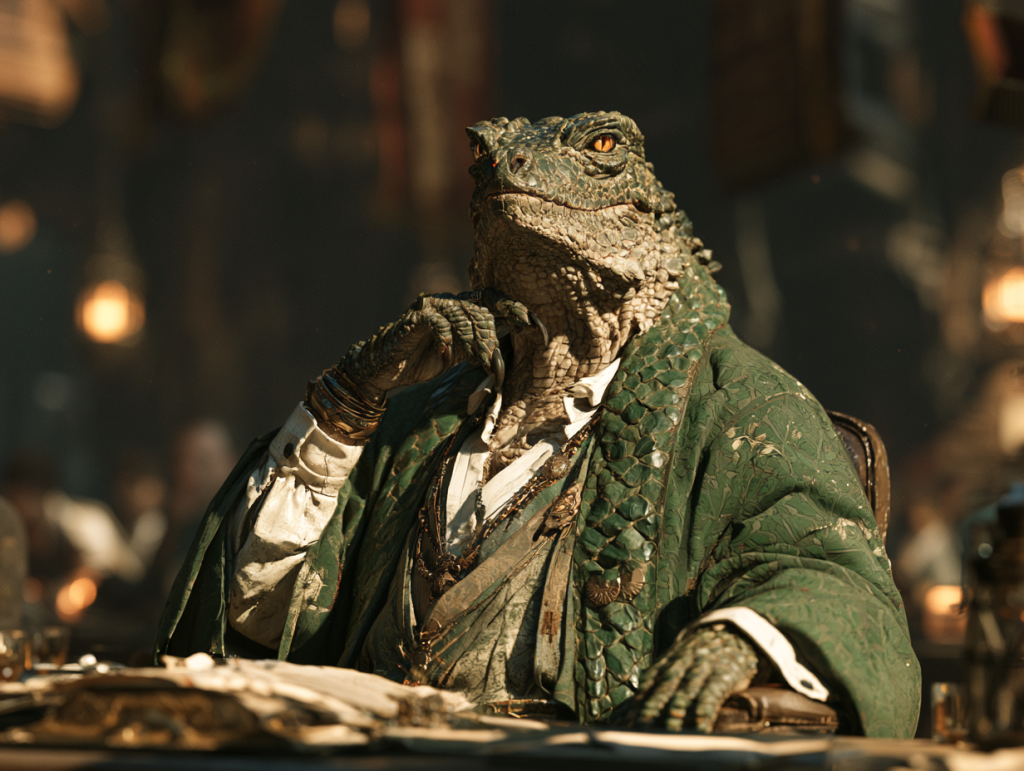
The only species in Andromeda that made neutrality a business model. The reptilian Veythran got their empire destroyed centuries ago and learned the lesson cold: never fight, just take a toll. They control the wormholes, they own the antimatter banks, and they’ll finance both sides of a war with the same polite smile. Their ledgers are works of art. Their promises are contracts with three pages of fine print. In a galaxy that burns empires, the Veythran will still be here, selling the ashes back to whoever survived.
12. Mirror Carthish
The Carthish spent so long fighting their own reflections they started becoming them. The Mirror Carthish are divergent lattice-minds — crystallized tyrants who rule pocket systems as semi-divine despots, their obsidian bodies trapping the faces of thousands of subjects like insects in amber. They’re regional threats, not galactic ones, fading as their parent species fades. But a fading tyrant is still a tyrant, and a Mirror Carthish king will spend a century on a grudge a human would forget in a decade.

13. Auric-Bred Hybrids
The empire’s finest argument that bloodlines are an asset class. These are the spliced children of humanity and half the galaxy — Kethari fractals folded into a merchant heir’s shoulders, Seykar chitin tracing a mercenary’s jaw, Turcus symmetry making a courtesan look like a painted knife. Some are dynasts with fleets. Some are inventory in the Flesh Markets. Most live somewhere between, carrying both halves of their inheritance and never quite belonging to either. In a galaxy of purists, they are the future — and the future is always mistrusted.

C. Anthropomorphic & Assimilated Races
14. Velkari
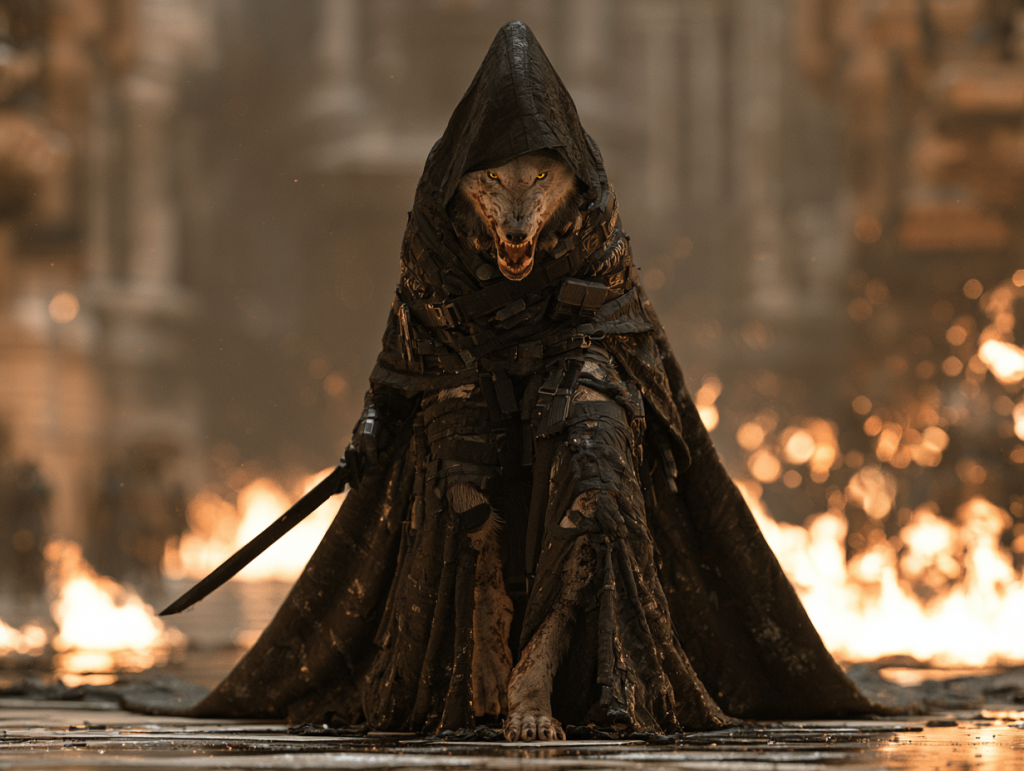
The wolf who signed a contract and never read the fine print. The Velkari are pack-hunters with noses that can read a lie off your skin, folded into Auric shock-troop legions where their howling charges break lines that polite infantry can’t. They’re proud, loyal, and culturally furious at the empire that bought their loyalty with a war nobody remembers starting. Valued soldiers, questionable allies — the moment the pack decides the contract is dishonored, you’d better hope your door locks from the inside.
15. Deythari
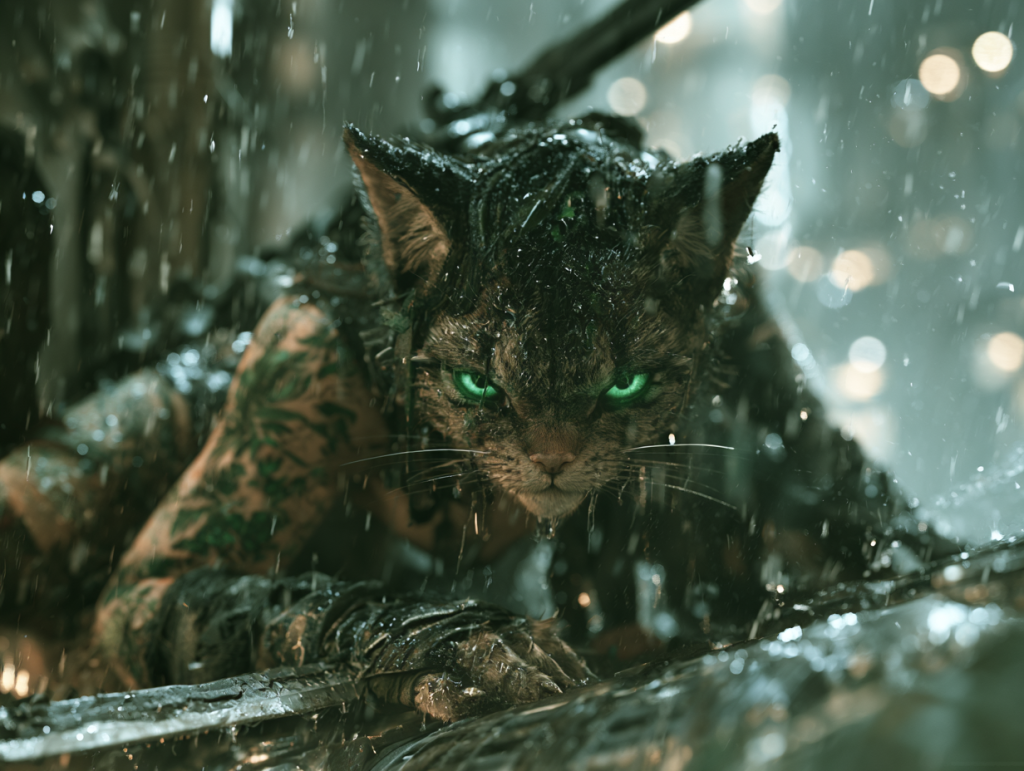
Jungle cats who lost their jungle and kept the claws. The Deythari’s homeworld was harvested by the Ozyth centuries ago, so they did what cats do: scattered, adapted, and made the whole galaxy their territory. They’re mercenaries, assassins, and smugglers along every trade route, moving through vents and shadows with night vision that turns darkness into a favor. A Deythari in a crowd is already gone. A Deythari on a rooftop is already decided. Their diaspora culture thrives because their species learned the one survival skill that matters — never be where the hunter expects.
16. Hravin
Muscle with a memory of being more. The Hravin are broad-shouldered simian heavyweights, strong enough to move what cranes can’t, mostly absorbed into the Zhoryn hives as a labor caste that never has to think too hard about its own freedom. The ones who resisted live as raiders, and they’re the scarier version — because a Hravin who has nothing left to lose will carry a bulkhead door as a shield and still have strength to spare. You hire them for the heavy work. You never ask what they’re thinking about while they do it.
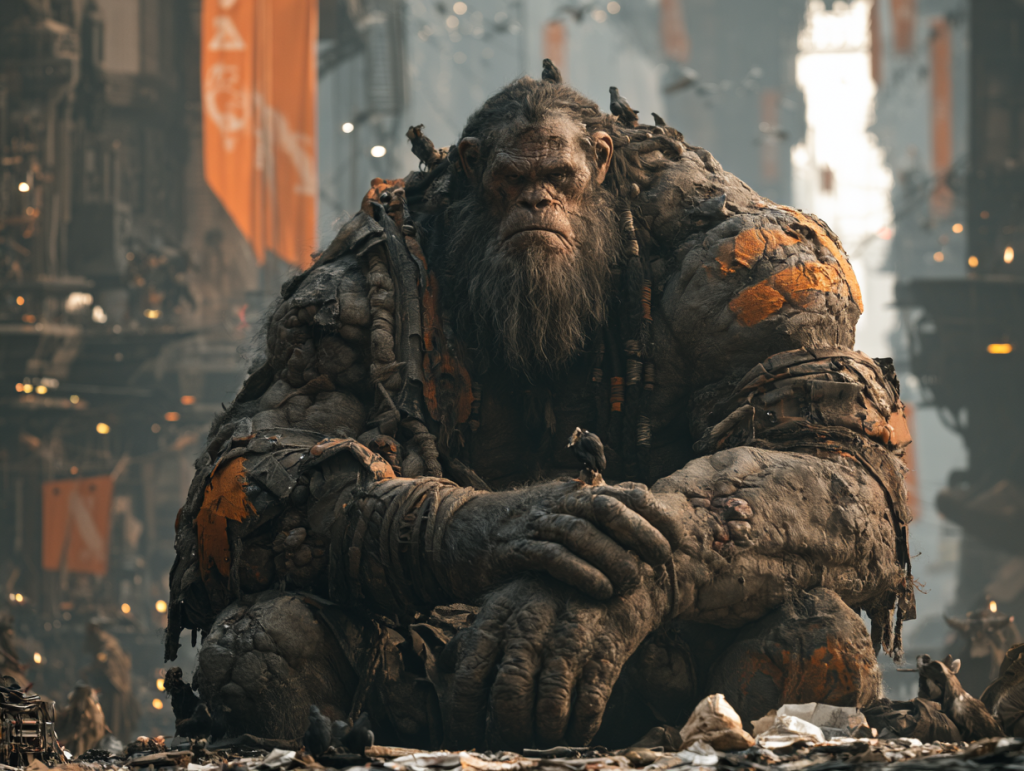
17. Talvori
Feathered, flightless, and fluent in the sound of a room going silent. The Talvori are poets and priests whose oratory can hold a war-council spellbound, subjugated by the Auric Syndics but outsized in influence — their rituals and aesthetics quietly colonized the religion of the empire that owns them. They serve as oracles and choir-masters, their voices bending ceremony into something sacred. A captive species that shapes its captors’ soul isn’t quite a captive. It’s a cage with a key it’s still pretending not to hold.

18. Senvrathi
The amphibian who breathes where you can’t and dives where you won’t. The Senvrathi are born to the water’s edge, comfortable in air and in the crushing blue beneath it, which makes them the best divers in the catalog and therefore the most valuable slaves in the Myrrax thalassocracies. The ones who escaped found enclaves in Concord space, and they carry a quiet hatred for their abyssal masters that’s colder than any ocean. Give one a spear and a reason, and they’ll drag a Myrrax raider down into the dark where the current does the rest.
19. Irkali
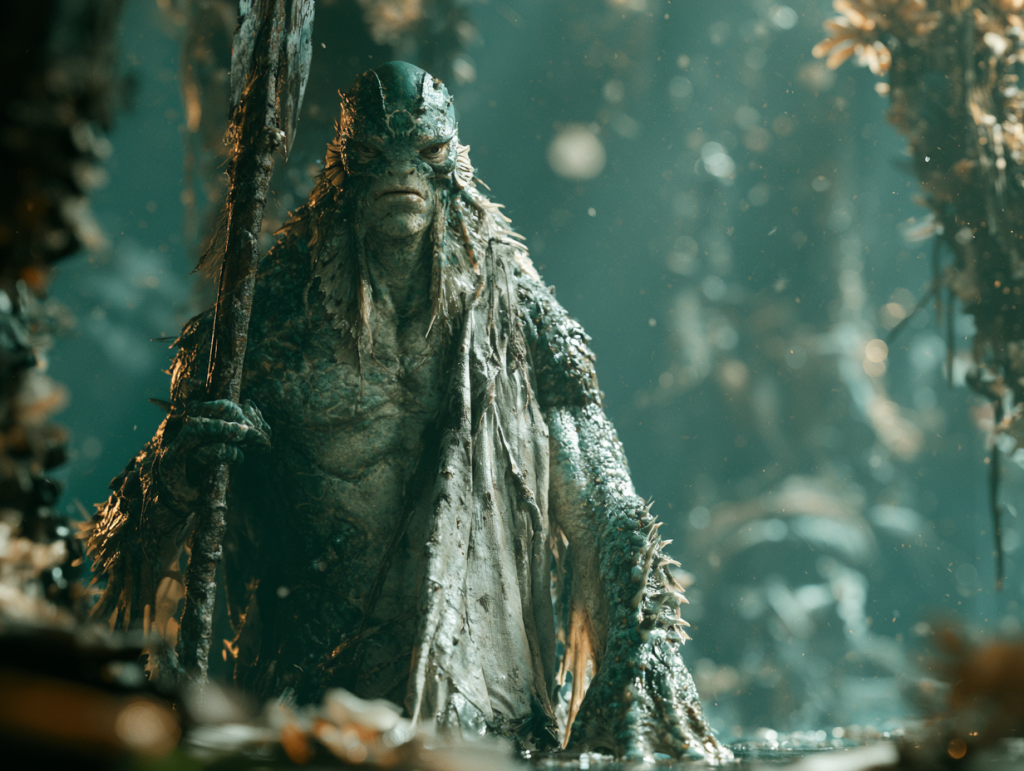
Desert dueling culture in a lizard’s hide. The Irkali are horned, frilled, and scaled like armor that grew out of them, with a warrior-cult honor system so elaborate it has rules for the rules. Assimilated into Auric armies as gladiatorial legions, they fight with a ritual precision that turns bloodsport into liturgy — and they’re admired for it, even by the humans who watch them bleed for entertainment. The tragedy is that they know the audience is applauding the wrong thing. The tragedy is that it makes them fight harder anyway.

20. Feylen
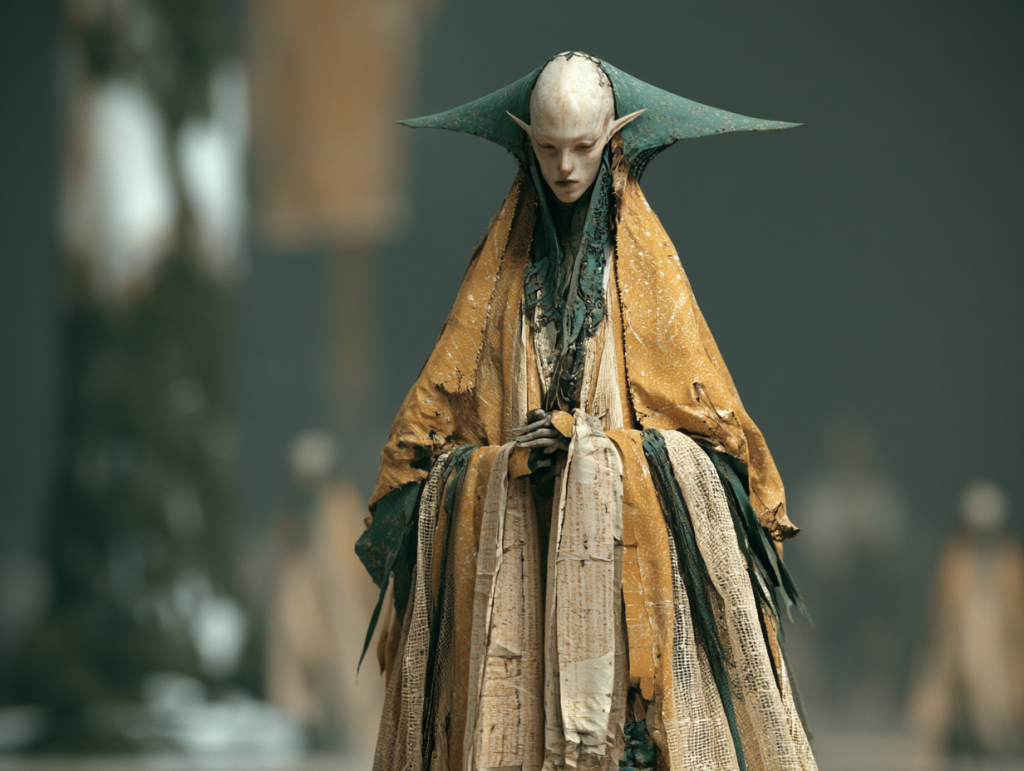
The elves who got here first and are tired of being mistaken for the other elves. Feylen are genetically close to baseline humans, intellectual and mystical, absorbed into the Choral Empyrean where they serve as the galaxy’s best mediators — calm, articulate, and quietly furious at being overshadowed by the Turcus, who took the elfin archetype and made it a slaver’s brand. Every time someone flinches at their ears, they lose a little more patience with the universe. They’re the diplomats you want in the room, and the ones you should never let overhear what you said in the hall.
21. Karnathi
The boar who doesn’t ask why, only how much. Karnathi are tusked, durable, and aggressive in the way that makes other species rearrange their seating. They hire out as mercenaries to Auric and Zhoryn armies alike, and their reputation is earned: brutal in the breach, loyal to the purse, and finished when the contract is finished. There’s a code under the tusks, though — a Karnathi who takes your coin takes your honor seriously. Buy them honestly and they’ll die in your name. Cheap them once, and you’ll learn why their ancestors grew tusks.

22. Osserai
Swamp-breathers with patience as slow as their metabolisms. The Osserai are amphibious reptile-folk from the wetlands, folded into the Zhoryn Collectives as scouts — silent, camouflaged, and able to wait in murk so long you forget they exist, which is exactly when they move. The ones outside the hives run guerilla enclaves in the backwaters, fighting assimilation with ambushes and disappearing acts. They’re the reason experienced officers check the waterline twice. And then a third time, for the one already gone.

23. Draverni
Mantids who outlived their conquerors by becoming furniture. The Draverni were assimilated into the Auric Ascendancy centuries ago and now fill the empire’s cities as laborers, their bioluminescent antennae flickering conversations humans can’t read. Underground, in the ruins beneath the streets, the old hive-castes still breed — patient, alien, and counting. They’re the quiet species in the corner of every factory floor, and the only sign of what they’re thinking is the light moving across their antennae. If you see that light go still, check your exits.